Thursday, July 28, 2022

July 25 Council Notes: Terry Fox Run Back, New Mosaic Mural, Gifts Council Can Receive

This year has been challenging for organizations and groups that host in-person events as people get back into the swing of things after the relaxation of public health measures. The Terry Fox Run is back this year in Langley though the organizers were late in getting in their community grant application. Given the exceptional past few years, Council approved their late application for $1,083 to allow the run to proceed. They will use this in-kind funding for renting Spirit Square and space at Douglas Rec Centre and for all required permits.

On Monday, Council also approved investing up to $10,000 for two murals on the side of the Rotary Centennial Park washroom building, as recommended by Langley City’s Arts, Recreation, Culture and Heritage Committee. The funding is from the City’s Public Art Fund.

One mural will be 19’ by 8’ and made of mosaic tiles. The second will be a 13’ by 8’ painted mural. Both will feature the theme of flight and movement, “recognizing the flight paths of birds and planes in the area, as well as movement from one place to another, and transitions of people in the area.”

Council approved an update to its policy “CO-45 Solicited or Unsolicited Gifts or Benefits Received by Members of City Council.” This update clarified when a member of Council can receive a gift and how a member of Council must report gifts they receive.

As a general rule, members of Council must not accept gifts or favours from people except if “it is a result of a protocol or social obligations that normally accompany the responsibilities of elected office.”

For example, if a member of Council is invited to a dinner or golf tournament to represent the City or show support for a non-profit community organization, that is permitted. If a resident or business owner buys a member of Council a coffee to have a chat, that would be OK too.

If a developer gives a member of Council box tickets to an NHL game complete with a comped fancy dinner and overnight hotel stay, that would not be acceptable.

A member of Council must disclose all gifts or benefits valued at more than $250.

Finally, Council referred two motions from the Mayor to staff for comment. The motions related to events around the motion of censure and sanction against the Mayor.

Wednesday, July 27, 2022

July 25 Council Notes: Apartment and Mixed-Use Projects. 46 Avenue Storm Sewer.

On Monday, Langley City Council held its final meeting before the summer meeting break. The next Council meeting will be on September 19th. As a note, there are now only two Council meetings left before the general local government election on October 15th.

Over the coming day, I’ll post about what Council addressed at the Monday meeting. Today, I will be focusing on development and infrastructure matters.

Council gave third reading to a rezoning bylaw which will allow for a 5-storey, 93-unit rental apartment at the northwest corner of 53rd Avenue and 201A Street.

Render of proposed apartment project at 20121, 20131, 20141, 20151, 20161 & 20171 53 Avenue. Select the image to enlarge.

You can read more about this proposed project in a previous post.

Before Council considers giving final reading of a rezoning bylaw and issuing a development permit, City staff make sure that all engineering drawings for a project are validated to meet all pertinent province laws, Langley City bylaws, and regulations. The City also makes sure it has collected all required deposits, fees, and charges.

Council gave final reading to a 6-storey, 92-unit apartment project on the southeast corner of 55A Avenue and Brydon Crescent as well as a 6-storey, 144-unit apartment mixed-use building on the northwest corner of 201A Street and Fraser Highway. The mixed-use building will have 9,053 sq. ft. of ground-level retail space. Council also issued a development permit for each of these projects.

A rendering of the proposed apartment project at 5494-5508 Brydon Crescent & 19890 55A Avenue. Select the image to enlarge.

Proposed mixed-use project view from the corner of 201A and Fraser Highway. 20137 & 20139 Fraser Highway. Select image to enlarge.

Council approved a tender in the amount of $549,124.68 (excluding GST) to Klondike Infrastructiure Ltd. to replace the storm sewer under 46 Avenue, as shown in the following map, with a 300mm perforated storm sewer.

Location of storm sewer renewal. Select map to enlarge.

Monday, July 25, 2022

TransLink’s current and future plans to invest billions into transit vehicle renewal

The federal Gas Tax Fund, now called the Canada Community-Building Fund, is a permanent federal funding program to support local governments. In Metro Vancouver, all municipalities decided to direct 95% of this funding to support TransLink renewal projects. TransLink is required, among other things, to get approval from the Metro Vancouver Regional District board about how they plan to invest these funds and provide an annual report on how they used them.

Since the program started in 2005, TransLink has received over $1.6 billion to keep the transit system in a state of good repair.

TransLink uses this funding to purchase or refurbish buses, SkyTrain cars, maintenance vehicles, elevators, and escalators. Sometimes TransLink uses this funding for larger projects such as a new Marpole Transit Centre or renewed of the Port Coquitlam Transit Centre. Transit Centres are where buses are stored and maintained.

TransLink currently has $910 million in active projects at the end of 2021.

If TransLink wants to change the scope of its projects that use the Canada Community-Building Fund, it must get approval from the Metro Vancouver Regional District board. TransLink is requesting that $74.3 million be put back into the funding pool. The number of new buses needed over the next decade will be less due to lower transit ridership because of the COVID-19 pandemic. TransLink can also reduce the number of original Mark I SkyTrain cars that need to be refurbished from 36 to 13 as a result of “a comprehensive condition assessment.”

If the board reduces the scope, there will be $327.9 million left in the funding pool. The funding, combined with the ongoing top-up of the fund by the federal government, will allow TransLink to invest an additional $1.6 billion over the next eight years to renew the transit fleets. The funding will be primarily used to purchase new trolley, battery electric and renewable natural gas buses.

For more information, please read the July 14th agenda of the Metro Vancouver Regional District Finance Committee.

Thursday, July 21, 2022

In Metro Vancouver, people are still throwing electronics and cardboard into the garbage

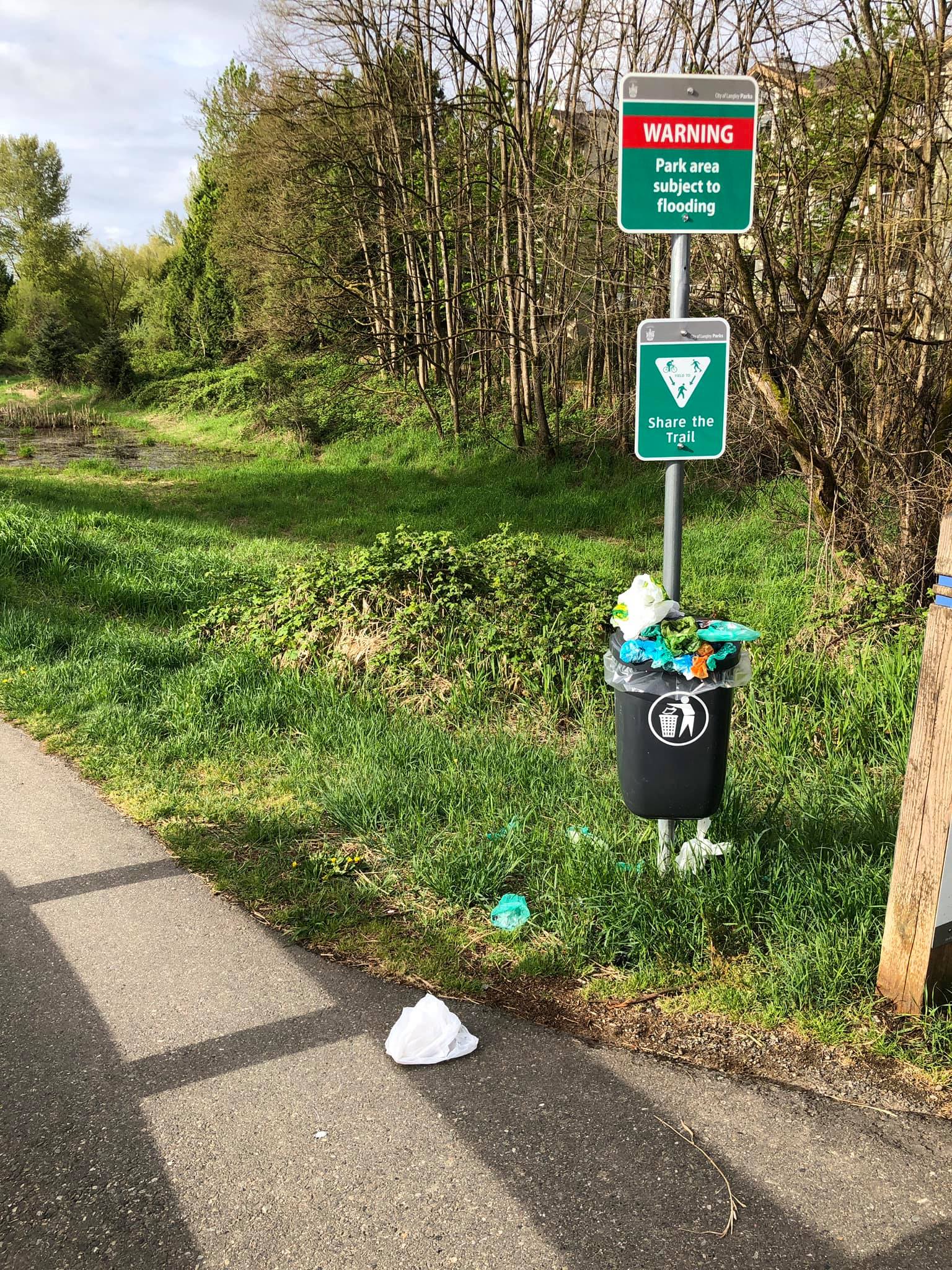
Garbage Can

In Metro Vancouver, recyclable items, hazardous items, and items that are part of a product stewardship program, such as e-waste, tires, or pesticides, cannot be put into the garbage. To keep people, municipalities, and companies honest, the Metro Vancouver Regional District inspects about a quarter of the loads arriving at regional waste transfer stations. If a load has banned items, the regional district will apply a surcharge to the load. This surcharge is to incentivize waste haulers not to accept banned items.

The following table shows the percentage of banned items found during inspections over the last three years.

Material 2019 2020 2021
Electronic Waste 30% 35% 26%
Cardboard 24% 20% 25%
Large Objects 5% 10% 11%
Mattresses 14% 9% 9%
Other Banned Materials 6% 5% 5%
Food Waste 4% 4% 5%
Gypsum 4% 3% 4%
Paint (Includes empty containers) 3% 4% 3%
Tires 3% 3% 3%
Clean Wood 2% 3% 3%
Expanded Polystyrene Packaging 1% 2% 3%
Green Waste 1% <1% 1%
Oil (Includes containers and filters) 1% <1% 1%
Recyclable Containers 1% <0.5% 0.50%
Recyclable Paper 1% <0.5% 0.50%

People putting electronics into the garbage is still a significant issue in our region, even with the easy access to Return-It Centres throughout Metro Vancouver. I wonder if we need to charge a deposit, like for bottles and cans, so people will be more likely to recycle and not throw out end-of-life electronics.

What shocked me was the amount of cardboard that ends up in the garbage, considering how universally easy it is to recycle that material.

The Metro Vancouver Regional District has a third party reviewing its disposal ban program to provide recommendations to improve the program to encourage more waste reduction and increased recycling. I look forward to seeing the recommendations.

For more information, please read the July 15th Zero Waste Committee Agenda.