Tuesday, January 10, 2023

Metro Vancouver Regional District Board and Committees. What’s in Store for the New Regional Growth Strategy.

With the new year, the Metro Vancouver Regional District Board and its committees have been restarted and refreshed with a new configuration of directors and members due to the fall municipal election.

Because there are 41 directors appointed from Tsawwassen First Nation, our region’s 21 municipalities, and one electoral area, most of the work in studying and developing policies occurs in committees with their work sent to the overall Metro Vancouver Board for approval.

People appointed to the Board and its committees should be working in the region’s best interest. Most of the time, what’s best for the region is also what’s best for a municipality, but there can be times when regional and local municipal interests appear misaligned. When there is a misalignment, a director or committee member must make a difficult call. In the past, I’ve noticed this happens most often around land use decisions.

Before the election, the Regional District was working towards adopting Metro 2050, which is the new regional growth strategy.

Map of land with the regional Rural land-use designation in Metro 2050. Select map to enlarge.

For a regional growth strategy to be “in force,” it must be approved by Tsawwassen First Nation and all 21 municipalities in Metro Vancouver. While Tsawwassen First Nation and 19 municipalities did approve Metro 2050, Surrey and Township of Langley Councils had concerns about Metro 2050, and each did not approve it before the municipal elections. It will be interesting to see how things shake out regarding adopting Metro 2050 with new Councils in Surrey and the Township, plus a refreshed Metro Vancouver Regional District Board.

Councillor Paul Albrecht and Councillor Rosemary Wallace are the primary and alternate appointments to the Metro Vancouver Regional District Board by Langley City Council. Councillor Albrecht is also on the Regional Planning Committee, Liquid Waste Committee and Water Committee. Councillor Wallace is on the Climate Action Committee and Zero Waste (Solid Waste) Committee.

Monday, January 9, 2023

The Rolling Strategic Plan: How it will Help Langley City Council Move Forward

When people run for office, they usually have ideas, policies, and initiatives they want to see implemented. Throughout a term in office, residents and businesses will suggest other items they want Council to address. Council members will also suggest new things they’d like to see implemented throughout the term. There are normally more great ideas than time or resources to implement them. Because of these limitations, most Councils develop strategic plans. These strategic plans help City staff implement the vision of Council and the community.

In Langley City, Council will hold a workshop to gather all ideas, policies, and initiatives and then will work to create a prioritized list of tasks for City staff. Some items from the list will be incorporated into the existing work plans of City staff. An example from a previous strategic plan was to hold regular neighbourhood meetings. Some items are more complex and require further planning before they can be implemented. A current example is the Urban Forest Management Strategy which is actively being developed. Most items require a budget, so the strategic plan is used by City staff to set the budget as well. You can see Langley City’s current strategic plan on the City’s website.

Because priorities can shift over a term in office, Langley City is moving toward a rolling strategic plan. Council will review the plan at least once per year to close out completed items, validate outstanding items that still make sense to complete, and add new items. Council will adopt the rolling strategic plan at least annually at a Council meeting.

In the past, our strategic plan was static and covered four years. If Council wanted to move forward with a new item outside the static strategic plan, Council had to do it via a one-off motion. In the last term, Langley City Council passed several significant one-off motions, including around community safety, reconciliation, and climate action, due to the limation of the previous strategic planning process.

Motions of Council as a healthy part of the democratic process, but too many one-off motions around significant items create uncertainty about what City staff should prioritize. An example of this was the City of Vancouver Council in the last term. That Council’s many one-off motions and limited strategic planning limited its ability to move forward with a vision for its community.

Strategic plans and planning are not sexy and generally don’t generate newspaper headlines. Even so, they are one of the most effective ways for Councils to get things done. It gives city staff clear direction.

Wednesday, January 4, 2023

HandyDART - Access Transit Service Update

One type of transit service we don’t spend a lot of time talking about is Access Transit, best known for the HandyDART service. This service evolved from various non-profits that provided door-to-door service for people to get to medical appointments and other essential daily trips. Today Access Transit service is funded and managed by TransLink and is contracted out to First Transit.

HandyDART Bus. Photo by Stephen Rees

Anyone with a physical, sensory, or cognitive disability who cannot use conventional public transit without assistance is eligible to apply to use Access Transit. The service is door-to-door.

With Access Transit, people are either dispatched a HandyDART bus or taxi if a HandyDART vehicle is unavailable. In talking with folks with knowledge and lived experience using Access Transit service, getting a taxi can create challenges as taxi operators don’t have the same training or vehicles to help people with disabilities. Whenever possible, Access Transit service should be delivered by HandyDART.

In September, the latest month where information is available, 77% of Access Transit trips were delivered with HandyDART operators and vehicles, while 23% of trips were by taxi vehicles.

The goal should be to lower taxi trips, which TransLink is working towards.

In Langley City, you will see a lot of HandyDART buses in our Downtown area due to the demographics of folks who live there. Overall, we are seeing an increased demand for HandyDART service throughout Metro Vancouver which will only continue to rise as our population ages. Another goal is to make conventional public transit more universally accessible so more people can use conventional transit services whenever possible.

To help improve the HandyDART user experience, TransLink is rolling out a new system that will provide online trip booking for customers, improved dispatch efficiency, and better reporting. TransLink is targeting the system to go online at the end of 2024.

Tuesday, January 3, 2023

The Importance of Place Names - kʷeyəlsteyt/Innes’ Corners/Langley City

Names are important as they should speak to the rich history and context of a place.

In 2016, I went on a trip to New Zealand/Aotearoa. One of the things that stood out to me was the integration of Māori names and culture into the everyday experience for people. The Māori people came to Aotearoa in the 14th century, while European explorers arrived in the 18th century.

When European settlers came, they started renaming places. In part, due to the Treaty of Waitangi settlement process, many places have either been dual-named or reverted to their original Māori name. This process continues today.

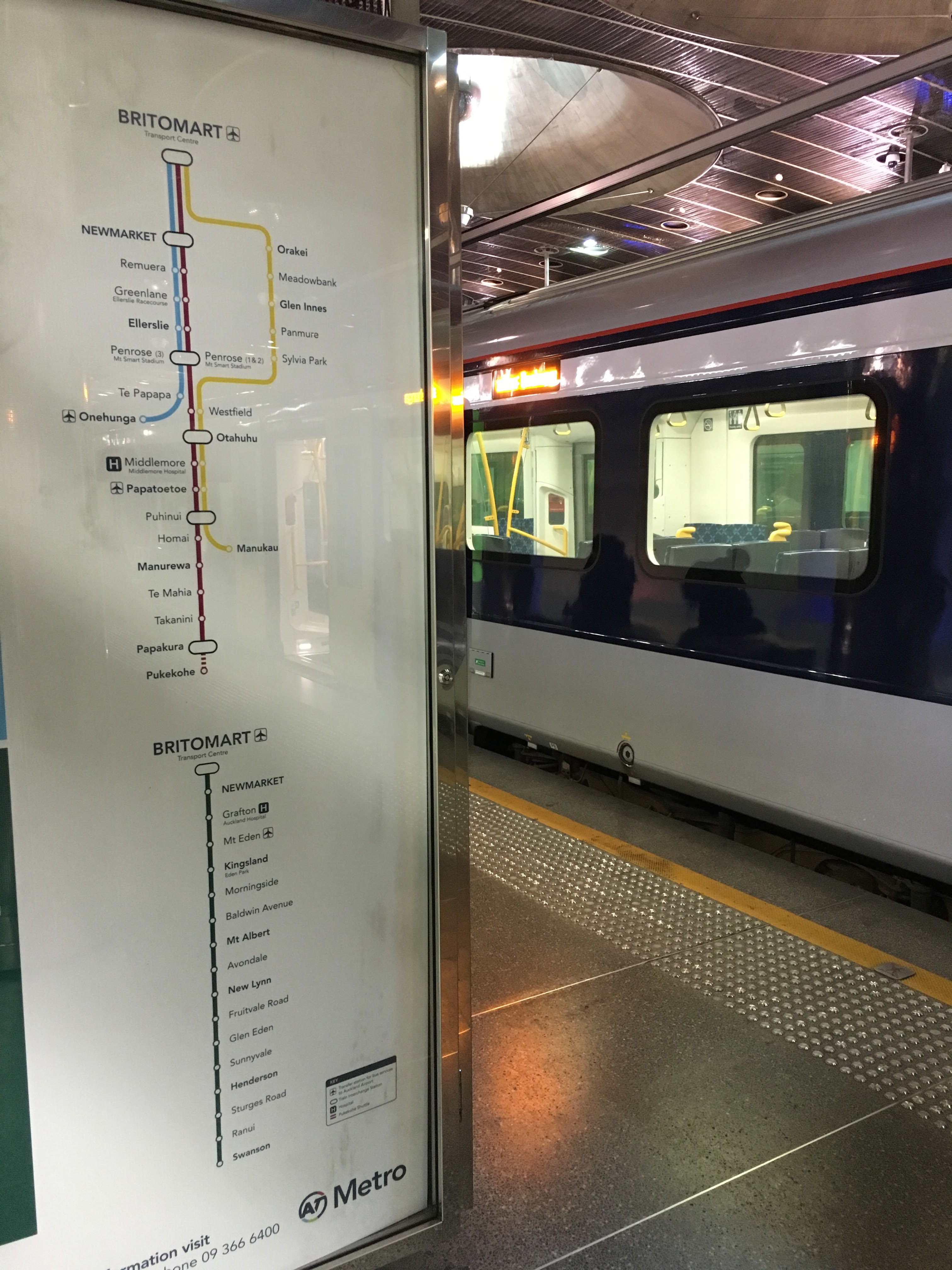
When I was there, they recently updated the train announcement on the transit system in Auckland, the largest City in New Zealand, to have proper Māori pronunciation of places.

Transit rail station names in Auckland, New Zealand. Select image to enlarge.

I’ve been thinking of the name Langley City and the importance of place names that connect us to rich histories and the land for some time. I was reminded of this again over the holidays when a friend sent me a picture of an old postcard of Langley Prairie.

Postcard of Langley Prairie (the previous name of Langley City) likely from the late 1940s. Select image to enlarge. Postcard seems to be by TC Walker of Chilliwack.

Fort Langley was named after Thomas Langley. When the Fort was founded, Mr. Langley was a Hudson’s Bay Company Governing Committee member. As far as I can tell, he lived in England and never set foot in what we call Langley today.

Present-day Langley City used to be called Innes’ Corners which was named after one of the first prominent European landowners in the area and who also served as Secretary of the local School Board. You can learn more about this history at the site Children of Fort Langley.

I’m unsure why Innes’ Corners was renamed Langley Prairie and then Langley City. It seems that Innes’ Corners would be a more significant name from a settler historical context.

What has been passed down from Kwantlen First Nation elders is that the place we call Langley City has been called kʷeyəlsteyt, pernounced Kway-ul-styte, for time immemorial.

I posted a straw poll on Twitter a few days ago asking if people would be interested in renaming Langley City. I asked this because of Thomas Langley’s weak connection to this land and the fact that two municipalities sharing that name confuse folks. While I take Twitter polls with a grain of salt, people seem interested in exploring renaming. It is certainly a conversation to continue.

I should point out that renaming Langley City is not a strategic priority of City Council or the City.