Monday, January 31, 2022

Langley City’s Proposed 2022 Budget – New Environmental Initiatives

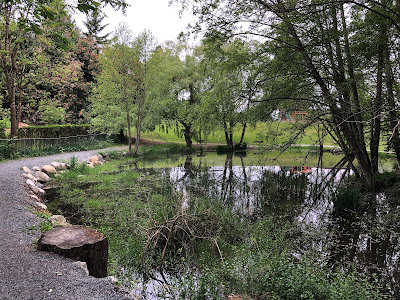
Conder Park Pond

Over the last little while, I’ve been posting about Langley City’s proposed 2022 Financial Plan and budget. You can read about the main driver of the proposed property tax increase, how assessed value and property tax are calculated, and how Langley City’s property tax compares to other municipalities in Metro Vancouver.

Over the last decade, we’ve seen an increase in extreme weather events. It seemed like these extreme events accelerated in 2021 with a heat dome in the summer and flooding this winter in Langley. The impacts of climate change are real. Langley City’s proposed budget includes line items to help reduce our environmental impact, including reducing greenhouse gas emissions and mitigating climate change impacts.

The first item is a new ongoing position, an Environmental Sustainability Coordinator (salary is $127,500). The person in this role will:

  • Create and support programs that divert waste from landfill, including reducing waste and increasing recycling and composting
  • Create and support programs to reduce water usage
  • Create and support programs to reduce the carbon footprint of City operations and the overall community
  • Create and support programs to mitigate climate change impacts such as reducing the city heat island effect and improving the tree canopy

The City’s proposed capital budget includes:

Creating a Sustainability Framework - Develop a sustainability framework that will illustrate the intersection between three key areas of focus - social, environmental and fiscal programs and initiatives for the City: $100,000 One-Time Cost.

Streetscape Waste Container Study - Assess the City’s waste receptacles and develop a strategy to report back to Council regarding the contamination of the waste materials: $85,000 One-Time Cost.

Urban Forest Management Plan - Hire a consultant to develop an urban forest strategy along with establishing guidelines and actions to perserve and enhance the urban forest in the City over the next 15 to 25 years: $110,000 One-Time Cost.

Thursday, January 27, 2022

Langley City had the lowest on average residential property tax in 2021

Langley City CPO

In 2021, Langley City had the lowest property taxes on average compared to other municipalities in Metro Vancouver.

The following tables show how Langley City compares*.

Detached Housing


Municipality Average Assessment Municipal Taxes
Langley City $878,124 $2,220
Pitt Meadows $784,843 $2,269
Surrey $1,166,370 $2,279
Langley Township $1,029,974 $2,281
Port Coquitlam $967,183 $2,472
Burnaby $1,523,022 $2,590
Delta $1,028,316 $2,599
Maple Ridge $852,682 $2,633
City of North Vancouver $1,547,793 $2,733
Coquitlam $1,240,202 $2,789
Richmond $1,535,350 $2,846
District of North Vancouver $1,697,203 $3,097
New Westminster $1,174,085 $3,322
Vancouver $2,166,505 $3,470
Port Moody $1,324,037 $3,552
White Rock $1,464,175 $3,793
West Vancouver $2,966,263 $5,030

Attached Housing (Townhouses/Apartments)


Municipality Average Assessment Municipal Taxes
Langley City $412,236 $1,042
Burnaby $618,832 $1,052
Surrey $530,654 $1,091
Richmond $658,516 $1,221
District of North Vancouver $679,355 $1,240
Langley Township $577,746 $1,279
Coquitlam $590,417 $1,328
City of North Vancouver $754,760 $1,332
Port Coquitlam $527,387 $1,348
Maple Ridge $454,561 $1,404
Vancouver $886,939 $1,420
White Rock $556,743 $1,442
Pitt Meadows $501,657 $1,450
Delta $589,419 $1,490
New Westminster $527,457 $1,492
Port Moody $656,817 $1,762
West Vancouver $1,446,256 $2,452

With this year’s proposed 4.35% increase to mainly cover increased RCMP labour costs, Langely City will likely still have the lowest average property tax in Metro Vancouver.

You will not find Anmore, Belcarra, Bowen Island Municipality, and Lions Bay in the tables as they all have populations under 5,000. Municipalities with a population under 5,000 are not responsible for police services.

*Source: Langley City 2022 Financial Plan

Wednesday, January 26, 2022

The confusing relationship between your property’s assessed value, a city’s budget, and your property taxes

I know there are some misconceptions about municipal property tax and how your assessed property value relates to the property tax you pay. I will use some examples to show the relationship.


We have a small city which has two properties. One property has an assessed value of $300,000, and the other has an assessed value of $1,000,000. The small city has $1,300,000 in total assessed property value.

This small city of two properties has $10,000 in expenses. The city will need to collect $10,000 in property taxes to pay for these expenses.

To calculate the property tax due, the staff at the small city need to set a rate. This rate is $10,000 divided by the total assessed value of $1,300,000. The rate is 0.00769231.

The owner of the first property will pay $300,000 x 0.00769231 = $2,307.69 in property tax.

The owner of the second property will pay $1,000,000 x 0.00769231 = $7,692.31 in property tax.


A year later, assessed property values have changed. Both properties have increased 20% in value.

The first property now has an assessed value of $360,000.00.

The second property now has an assessed value of $1,200,000.

The small city still has $10,000 in expenses, so it will need to divide the $10,000 in property tax it needs to collect by the new $1,560,000 in total assessed property value. The rate is 0.00641026.

The owner of the first property will pay $360,000 x 0.00641026 = $2,307.69 in property tax.

The owner of the second property will pay $1,200,000 x 0.00641026 = $7,692.31 in property tax.

The property taxes did not change.


The following year, property values have stayed the same, but the cost of delivering services in the small city has increased. The city now has $12,000 in expense, so they need to raise $12,000 in property tax. The new rate is $12,000 divided by $1,560,000 in total assessed property value which equals 0.00769231.

The owner of the first property will pay $360,000 x 0.00769231 = $2,769.23 in property tax.

The owner of the second property will pay $1,200,000 x 0.00769231 = $9,230.77 in property tax.

The city’s expenses and both properties’ taxes went up 20%.


A year later, the property values change yet again.

The first property owner’s townhouse increases in value 20%. The second property owner’s single-family home increased in value by 40%.

The first property now has an assessed value of $432,000.00.

The second property now has an assessed value of $1,680,000.

The small city still has $12,000 in expenses, so they still need to raise $12,000 in property tax. City staff divide $12,000 into the new total assessed property value of $2,112,000. The rate is 0.00568182.

The owner of the first property will pay $432,000 x 0.00568182 = $2,454.55 in property tax.

The owner of the second property will pay $1,680,000 x 0.00568182 = $9,545.46 in property tax.

Even though the city’s expenses did not change, the first property owner sees an 11.4% decrease in property tax while the second property owner sees a property tax increase of 3.4%.


As I posted yesterday, Langely City needs to increase its property taxes by 4.35% to cover new expenses. In Langley City, single-family homes increased in value at a faster rate than townhouses or apartments last year.

So let’s look at this final example.


The small city’s expenses need to increase by 4.35% from $12,000 to $12,522.

The first property owner’s townhouse increased in value by 15%. The second property owner’s single-family home increased in value by 30%.

The first property now has an assessed value of $496,000.

The second property now has an assessed value of $2,184,000

The small city has a total assessed property value of $2,680,000. $12,522 in expense divided by $2,680,000 in total property values means the rate is now 0.00467239.

The owner of the first property will pay $496,000 x 0.00467239 = $2,317.50 in property tax.

The owner of the second property will pay $2,184,000 x 0.00467239 = $10,204.49 in property tax.

The small city’s expense increase 4.35%, the first property owners taxes decrease by 5.6% while the second property owners taxes increase by 6.9%.


These examples show how a city’s budget increase, changes in assessed property values, and property taxes are related.

You can see the actual changes in your property taxes over the years by visiting Langley City’s Property Information search portal.

Tuesday, January 25, 2022

RCMP contract costs driving proposed 4.35% property tax increase in Langley City

Langley City CPO

All municipalities in BC, including Langley City, are going through the process of adopting their 2022 financial plan and budget. Like most municipalities in BC, a significant driver of this year’s property tax increase is RCMP costs.

Since 2017, the City has known that the National Police Federation and the federal government have been negotiating their first collective agreement. As such, Langley City Council has approved increasing the policing budget an additional 2.5% over the last five years in anticipation of increased policing costs resulting from the collective agreement.

Even with this built-in buffer, the City needs an additional $1.54 million this year to cover the now completed collective agreement.

I fully support unions and the right to collective bargaining.

Langley City and Township contract the RCMP to provide policing services to our communities.

As municipalities, we control the number of RCMP members. As specified in federal/provincial policing agreements, “the Commissioner of the Royal Canadian Mounted Police, under the direction of the Federal Minister, has the control and management of the RCMP.”

These agreements mean that the federal government essentially tells us how much we will pay for our 54.4 RCMP members, and we budget accordingly.

As part of these agreements with the federal government, as RCMP members also do federal policing, municipalities get a 10% discount on RCMP contract policing.

Even with the 10% discount, RCMP contract policing and independent municipal policing costs are now more aligned than ever before.

Excluding policing costs, Langley City taxpayers would have seen a 0.56% reduction in property tax. Policing costs mean that Langely City Council proposes increasing property tax by 4.35% this year.

Policing costs in 2022 are proposed to be $15.1 million, representing 45% of all property tax collected.

The City is budgeting to collect $33.2 million in property tax, $14.1 million in fees, and $10.9 million from other sources, including the casino in 2022.

I will post more about the proposed 2022 Langley City financial plan and budget over the coming days.